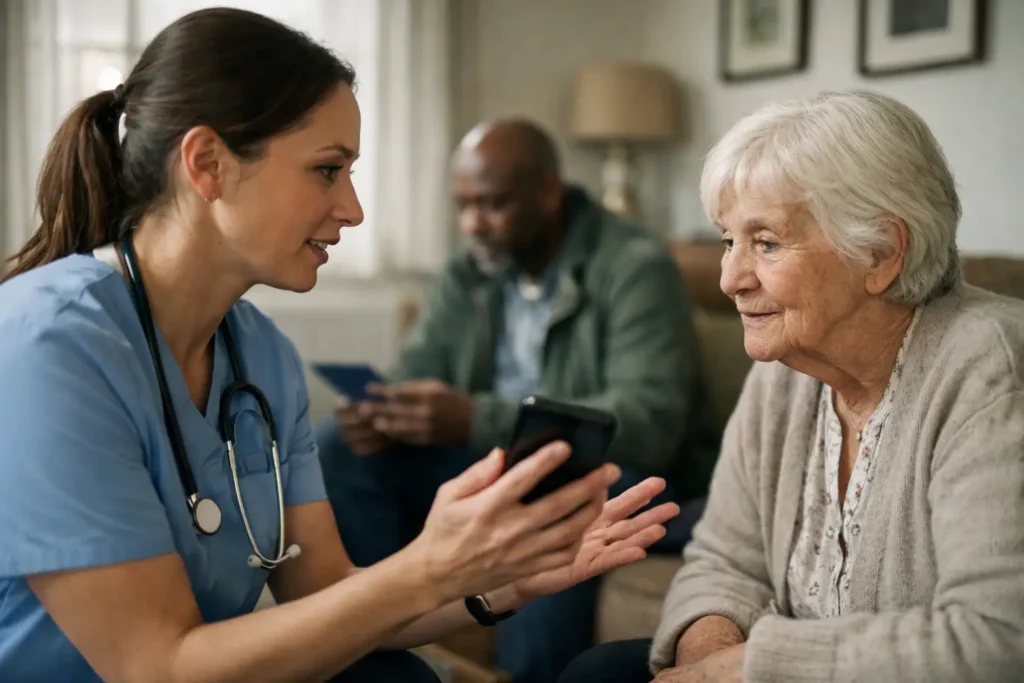
A missed appointment is not always a lack of interest. It may mean a letter was hard to understand, a web page did not work on a phone, a person feared being judged, or they simply did not know a service was for them. A healthcare communications strategy exists to close that gap between a service being available and people feeling able to use it.
For healthcare providers, charities, public health teams and community organisations, communications can directly affect outcomes. Clearer information can encourage someone to seek support sooner. A well-planned campaign can help a family understand where to turn. Consistent messages can give funders, partners and frontline staff confidence in what your organisation does and why it matters.
Start with the human barrier, not the channel
It is tempting to begin with a request for a new website, more social posts or a campaign for a particular awareness day. Those may be useful outputs, but they are not a strategy on their own. Start by identifying the behaviour or decision that needs to change.
Perhaps people are not referring themselves to an addiction support service. Perhaps GPs and social prescribers are unaware of a community programme. Perhaps existing patients do not understand how to prepare for an appointment, leading to avoidable non-attendance. Each problem needs different communications, even if the same organisation is involved.
Ask what people need to know, feel and do. Then ask what may be getting in their way. The barriers are often practical, emotional and structural at the same time. Language, health literacy, transport, digital access, stigma, previous experiences of services and fear of costs or consequences can all shape whether a message lands.
This is where communications teams need to resist easy assumptions. A polished campaign cannot compensate for an unclear referral pathway or a service with long waiting times. Communications should not over-promise. It should help people make informed choices while giving service teams useful evidence about where the journey is breaking down.
Build a healthcare communications strategy around audiences
“Patients” is rarely a useful enough audience description. Nor is “the public”. People have different levels of knowledge, different needs and different reasons for engaging with your organisation.
A sexual health service may need to speak differently to young people, parents, local community leaders and referring professionals. A charity supporting people after stroke may need separate messages for those newly diagnosed, unpaid carers, clinicians and potential donors. The core purpose can remain consistent, but the emphasis, tone and route to reach each group should change.
Good audience work combines evidence with listening. Review service data, referral sources, search queries, feedback, complaints and calls to your team. Speak to frontline colleagues, who often know the questions people are reluctant to ask publicly. Where possible, involve people with lived experience in shaping language, imagery and formats.
Co-production takes time and should be properly supported and paid for where appropriate. But it can prevent expensive mistakes, particularly when communicating about mental health, substance use, disability, domestic abuse, cancer or health inequalities. People are more likely to recognise themselves in communications that have been informed by their reality rather than created at a distance.
Make one clear promise
For every priority audience, define the simplest useful message. This is not a slogan for its own sake. It is an answer to the question: why should this person pay attention now?
For example, “Free, confidential support to help you cut down or stop drinking” is clearer than a broad statement about promoting wellbeing. It tells people what is available and reduces uncertainty. The next step should be equally clear: call, self-refer, attend a drop-in session, ask a GP, download a guide or speak to a named team.
Plain English matters, but simplicity is not the same as stripping away necessary detail. Some services have eligibility criteria, clinical risks or safeguarding procedures that need careful explanation. Put the essential action first, then offer more detail in layers for people who need it.
Design for access, dignity and safety
Healthcare information is often read under pressure: on a bus, in a waiting room, late at night, or while someone is worried about a loved one. It needs to work in those conditions.
Accessible communication means more than meeting a checklist. Use clear headings, readable type, meaningful labels, strong colour contrast and straightforward forms. Ensure videos have captions, images have useful alt text and key content can be used with a keyboard and screen reader. Avoid placing vital information only in an image or a PDF.
Language also affects dignity. Clinical terms may be accurate but unfamiliar. Euphemisms can be confusing. Stigmatising language can push people away altogether. Agree preferred terminology with people who use your services and the professionals delivering them, then give colleagues a practical guide they can apply consistently.
Translation can be essential, but it must be planned thoughtfully. A direct translation may not explain a complex health concept in a culturally meaningful way. Community partners can help test whether information is clear, respectful and likely to be acted upon. For some audiences, audio, video, illustrated content, interpretation or face-to-face conversations may be more appropriate than written leaflets.
There are trade-offs. Publishing information in many formats takes resource, and not every campaign can do everything at once. Prioritise the formats that remove the biggest barriers for the people most at risk of being excluded, then improve over time.
Join up messages across the whole journey
People do not experience your communications in departmental silos. They may first see a social post, search for your service, visit a website, receive a text reminder and then speak to a receptionist. If each touchpoint sounds different or gives conflicting instructions, confidence falls quickly.
Map the journey from first awareness to the action you need someone to take. Look closely at transition points: from a campaign to a landing page, from a referral to confirmation, or from discharge to ongoing support. These are the moments where people can lose momentum.
Your website should usually act as the dependable source of detail, rather than trying to make social media carry every explanation. Social content can raise awareness, answer common questions and direct people to the right place. Printed materials still have a role where digital exclusion is high. Email may be right for partners and supporters, while direct messaging or SMS may be more effective for appointment reminders.
Channel choice depends on the audience and the action, not what is easiest for the organisation to publish. A young person may encounter a campaign on social media but prefer to contact a service by text. A carer may search online late at night. A clinician may need a concise referral guide they can find in seconds.
Give staff and partners the confidence to communicate well
A communications strategy should not sit only with the communications team. Frontline staff, volunteers, reception teams, trustees and delivery partners all influence how people understand your service.
Provide simple message frameworks, frequently asked questions and escalation routes for sensitive queries. This is particularly valuable during service changes, media attention, public health incidents or funding uncertainty. Staff should know what they can say, what they should not speculate about and where to send someone for specialist advice.
Consistency does not mean scripting every human interaction. It means agreeing the facts, the tone and the commitments that should remain steady. When teams understand the purpose behind the message, they can communicate with more warmth and confidence.
Measure whether communication changed anything
Reach is useful, but it is not the destination. A post may receive thousands of views while generating no meaningful service uptake. Equally, a small, targeted campaign may produce a modest number of referrals that are exactly right for a specialist service.
Set measures that reflect the intended outcome. These might include completed self-referrals, attendance rates, downloads of a support resource, calls from priority postcodes, professional referrals, event sign-ups or improved understanding in a short survey. Pair numbers with feedback from people using the service. Data can show what happened; lived experience can help explain why.
Be realistic about attribution. Healthcare decisions are rarely caused by one message alone. Someone may act after seeing a poster, hearing a recommendation from a friend and searching online weeks later. Track what you can, ask people how they heard about you, and look for patterns over time rather than claiming certainty where none exists.
A strong healthcare communications strategy is not about making an organisation sound louder. It is about making the next right step clearer for the people who need it. When every word has weight and every pound has to work hard, that clarity is not a finishing touch. It is part of the service itself.